Emergency Drain Cleaning: How to Handle Blockages
A blocked drain is more than just an annoyance. Picture walking into the shower to find dirty water all around your feet, flushing the loo and having the water level actually go up, or simply discovering that the water's backing up through your kitchen sink. It's a right pain, it's a right nuisance, and can very quickly become a complete day of disruption. When water has nowhere to go, a minor blockage can very quickly become a plumbing emergency.
If you're in a clogged drain emergency, then knowing what to do next can go a long way to preventing further damage. Whether it's a particularly persistent kitchen clog, an emergency blocked drain, or a suspected blockage in the sewer line, the right course of action is important. From emergency drain snaking to professional sewer line blockage removal, knowing your options can help you avoid some serious mistakes and get your drains back to normal.
his guide looks at how to deal with an emergency drain blockage, what the warning signs are, and when you should call in a professional for emergency drain cleaning.
Key Takeaways
- Stop using affected plumbing fixtures when water starts backing up to prevent additional wastewater overflow.
- Multiple clogged drains may indicate a blockage in the main sewer line rather than an isolated fixture clog.
- Keep children and pets away from sewage backups because wastewater can contain harmful microorganisms.
- Avoid chemical drain cleaners, especially when dealing with severe blockages or septic systems.
- Emergency drain snaking can remove certain obstructions, including hair, debris, and other materials trapped inside pipes.
- Hydro jetting may be suitable for stubborn grease, sludge, and buildup when the pipe condition allows it.
- Recurring drain blockages may point to deeper issues, such as tree root intrusion, damaged pipes, or sewer line deterioration.
- A sewer camera inspection can help identify the location and cause of underground drainage problems.
- Prompt professional drain cleaning can help prevent further backups, property damage, and recurring plumbing issues.
How to Recognize a Drain Cleaning Emergency
Not every clogged drain requires an emergency service call. A bathroom sink draining slowly may have a simple obstruction near the drain opening. However, some symptoms indicate a more serious problem inside the drainage or sewer system.
Watch for these warning signs:
- Water backing up into fixtures: Water coming up through a bathtub, shower, sink, or floor drain can indicate a blockage further down the drainage line.
- Multiple drains clogging at once: When several fixtures stop draining properly, the problem may involve a shared drain line or the main sewer line.
- Sewage coming out of a drain: Wastewater backing up into your home requires prompt professional attention because of potential contamination.
- Toilets bubbling or gurgling: Unusual bubbling when another fixture drains may indicate restricted wastewater flow or a problem with the plumbing system.
- Strong sewer odors: Persistent sewage smells combined with slow drainage or backups can indicate a drainage or sewer line problem.
- Repeated drain blockages: A clog that returns shortly after cleaning may indicate deeper buildup, pipe damage, or another underlying issue.
One useful distinction is whether the problem affects one fixture or several. A single slow sink may have a localized blockage. Several affected fixtures suggest that the problem could be further downstream.
What to Do During an Emergency Drain Blockage
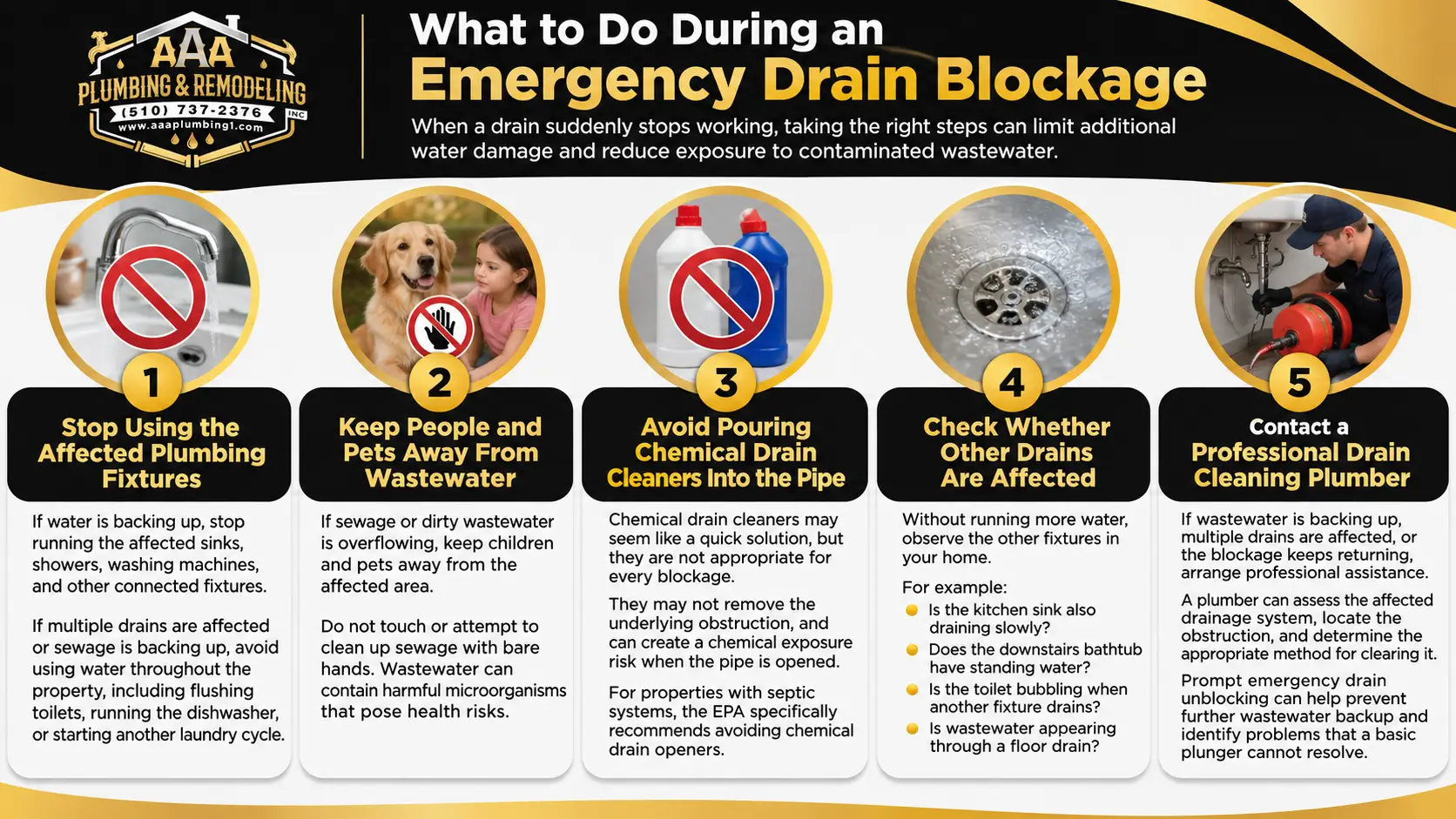
When a drain suddenly stops working, taking the right steps can limit additional water damage and reduce exposure to contaminated wastewater.
1. Stop Using the Affected Plumbing Fixtures
If water is backing up, stop running the affected sinks, showers, washing machines, and other connected fixtures.
If multiple drains are affected or sewage is backing up, stop using water throughout the property as much as possible. Avoid flushing toilets, running the dishwasher, or starting another laundry cycle.
Why? Water entering a blocked drainage system has nowhere to go. Additional wastewater can cause it to back up through the lowest available drain.
2. Keep People and Pets Away From Wastewater
If sewage or dirty wastewater is overflowing, keep children and pets away from the affected area.
Do not touch or attempt to clean up sewage with bare hands. Wastewater can contain harmful microorganisms that pose health risks.
The CDC advises avoiding contact with sewage-contaminated water. If sewage has entered your home, arrange appropriate professional assistance and follow local public health guidance.
3. Avoid Pouring Chemical Drain Cleaners Into the Pipe
Chemical drain cleaners may seem like a quick solution, but they are not appropriate for every blockage.
They may not remove the underlying obstruction, particularly when the problem involves a main sewer line, foreign objects, or damaged pipes.
If you have already used a chemical product, tell the plumber before any work begins. The product may create a chemical exposure risk when the pipe is opened.
For properties with septic systems, the EPA specifically recommends avoiding chemical drain openers because they can interfere with the biological processes that treat household wastewater.
4. Check Whether Other Drains Are Affected
Without running more water, observe the other fixtures in your home.
For example:
- Is the kitchen sink also draining slowly?
- Does the downstairs bathtub have standing water?
- Is the toilet bubbling when another fixture drains?
- Is wastewater appearing through a floor drain?
These observations can help distinguish a localized fixture clog from a potentially larger drainage problem.
Do not repeatedly flush or run water to test the system if a backup is already occurring.
5. Contact a Professional Drain Cleaning Plumber
If wastewater is backing up, multiple drains are affected, or the blockage keeps returning, arrange professional assistance.
A plumber can assess the affected drainage system, locate the obstruction, and determine the appropriate method for clearing it.
Prompt emergency drain unblocking can help prevent further wastewater backup and identify problems that a basic plunger cannot resolve.
When Is Emergency Drain Snaking Necessary?
A plumbing snake, also called a drain auger, is a mechanical tool used to reach and remove certain obstructions inside drainpipes.
During emergency drain snaking, a plumber feeds the appropriate cable into the affected drain line to break through, retrieve, or clear the blockage.
This method can be useful for:
- Hair and soap buildup in bathroom drains.
- Accumulated debris inside kitchen drainpipes.
- Certain obstructions in branch drain lines.
- Blockages caused by foreign objects that can be safely retrieved.
- Some obstructions affecting larger drain lines.
However, the type and condition of the pipe matter.
For example, forcing a drain snake through an older, damaged, or deteriorated pipe can cause additional problems. The plumber should determine whether mechanical cleaning is suitable before proceeding.
If the blockage is deeper in the sewer line or involves substantial grease and debris buildup, another cleaning method may be more appropriate.
Emergency Drain Unblocking: When Is Hydro Jetting a Better Option?
Some drain blockages cannot be fully addressed with conventional snaking.
Grease, sludge, mineral deposits, and accumulated debris can stick to the interior walls of drainage pipes. Even when a snake opens a passage through the blockage, some buildup may remain.
This is where hydro jetting may be considered.
Hydro jetting uses specialized equipment to direct high-pressure water through the pipe, helping remove accumulated material from the interior walls.
A professional may recommend hydro jetting when dealing with:
- Significant grease buildup.
- Persistent debris accumulation.
- Recurring blockages.
- Certain commercial kitchen drain problems.
- Stubborn obstructions that require more extensive cleaning.
Hydro jetting is not suitable for every plumbing system. The condition, material, and configuration of the pipes should be evaluated first. Damaged or weakened pipes may require a different approach.
The objective is not simply to force water through the blockage. It is to select a cleaning method that addresses the obstruction without causing unnecessary pipe damage.
What If the Blockage Is in the Main Sewer Line?
A blocked main sewer line is more serious than a clogged bathroom or kitchen drain.
Your home’s individual fixtures connect to drainage pipes that eventually carry wastewater into the main sewer line. If that line becomes obstructed, wastewater from multiple fixtures may have difficulty leaving the property.
Common causes include:
- Tree roots entering underground sewer pipes.
- Grease and solid waste accumulation.
- Foreign objects entering the drainage system.
- Cracked, collapsed, or deteriorating sewer pipes.
- Heavy deposits inside older sewer lines.
One common warning sign is wastewater backing up through a lower-level bathtub, shower, or floor drain when another fixture is used.
If you suspect a main sewer blockage, stop using the plumbing system and arrange professional assessment.
When Is a Sewer Camera Inspection Needed?
Recurring blockages or suspected underground sewer problems may require a sewer camera inspection.
A specialized camera is inserted into the sewer line to examine its interior. This allows the plumber to identify conditions such as:
- Root intrusion.
- Pipe cracks or breaks.
- Heavy internal buildup.
- Misaligned pipe sections.
- Other visible obstructions or damage.
The sewer camera inspection helps determine whether the problem can be addressed through cleaning or whether the sewer line needs repair or replacement.
For example, if tree roots repeatedly enter a damaged sewer pipe, repeatedly clearing the blockage will not correct the underlying problem.
Depending on the pipe’s condition, the next step may involve sewer repair or replacement rather than another round of drain cleaning.
Sewage Blockage Removal: Why You Should Not Delay
Sewage blockage removal requires more attention than clearing an ordinary sink clog.
When wastewater cannot move through the sewer system, it may return through plumbing fixtures or escape from an outdoor sewer access point.
This creates several concerns:
Property contamination: Sewage can contaminate flooring, walls, personal belongings, and other surfaces.
Health concerns: Untreated wastewater may contain bacteria, viruses, and other harmful microorganisms.
Damage to building materials: Continued wastewater exposure can damage flooring, cabinetry, drywall, and other materials.
Recurring plumbing problems: If the original cause is not identified, the blockage may return even after the immediate obstruction is removed.
Keep people away from contaminated areas and avoid attempting to open sewer cleanouts or handle overflowing wastewater yourself.
If sewage has entered the property, plumbing repairs and appropriate contamination cleanup may both be necessary.
How to Prevent Another Emergency Drain Clog
Although some blockages happen unexpectedly, everyday habits can reduce the likelihood of future problems.
Here are some practical precautions:
- Keep grease out of kitchen drains. Allow cooking grease to cool and dispose of it in the trash rather than pouring it into the sink.
- Use drain screens. Hair and soap residue can gradually accumulate inside bathroom drains. A screen helps catch some of this debris.
- Avoid flushing wipes. Even products labeled flushable can contribute to plumbing blockages.
- Keep food waste out of drains. Scrape food scraps into the trash before washing dishes.
- Pay attention to recurring slow drains. A drain that repeatedly slows down may have a deeper obstruction that needs attention.
- Investigate unusual gurgling and odors. These symptoms can indicate drainage problems that should not be ignored.
For properties with older plumbing or recurring sewer issues, periodic professional assessment can help identify developing problems before they result in a major backup.
Need Emergency Drain Cleaning in Castro Valley, CA?
A blocked drain can interrupt your routine, affect your property, and create an unpleasant situation for everyone involved. Knowing when to stop using the plumbing and when to call a professional can make a significant difference.
At AAA Plumbing & Remodeling Inc., we provide professional drain cleaning for residential and commercial properties in Castro Valley and surrounding East Bay communities.
With more than 20 years of plumbing industry experience, our team handles clogged drains, recurring blockages, and drainage problems affecting different parts of a property’s plumbing system.
We assess the problem and explain the recommended work so you understand what is happening before the work begins.
Our California contractor license is LIC#1052769, with C36, C42, A, and B General classifications.
Whether you are dealing with a blocked kitchen sink, an overflowing floor drain, or a suspected sewer line obstruction, we can assess the situation and recommend an appropriate solution.
If you need professional Drain Cleaning Services, contact AAA Plumbing & Remodeling Inc. at 510-737-2376.
You can also learn more about our Emergency Plumbing Services in Castro Valley and other plumbing solutions.