When to Call a Plumber for a Clogged Toilet
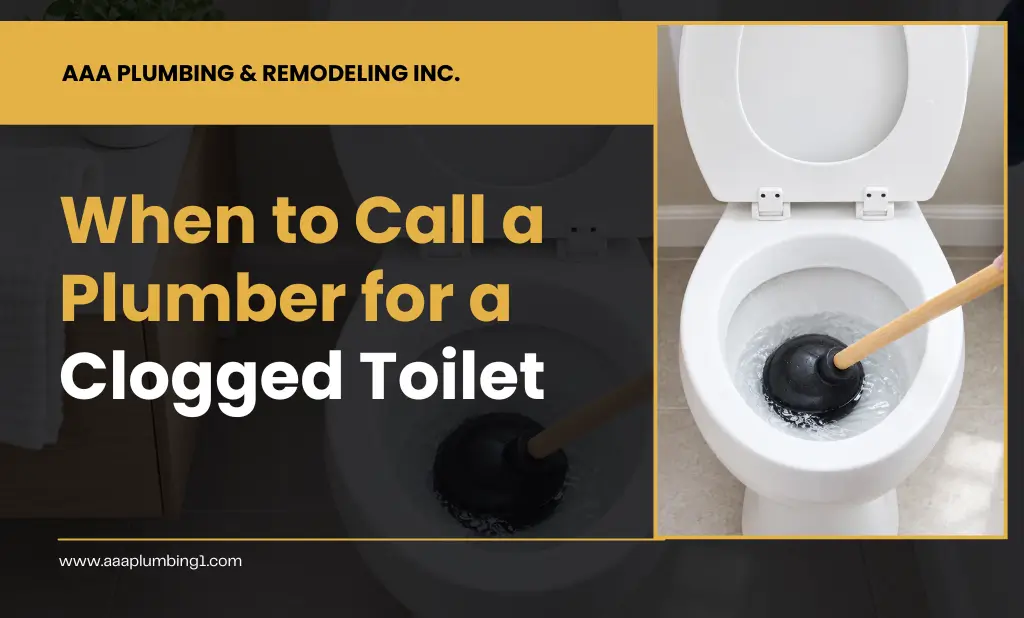
A clogged toilet always seems to happen at the worst possible time. You flush, the water starts rising, and suddenly you’re standing there wondering if the whole bathroom is about to flood. You grab the plunger, work at it for a few minutes, and hope the problem is gone.Sometimes it is. But if the toilet clogs again, drains slowly, makes a strange gurgling sound, or causes water to back up somewhere else, the problem may be more than a simple blockage.That’s when many homeowners start asking, “Should I keep trying to fix this myself, or is it time to call a plumber?”Knowing the difference between when it is a DIY job and when to call a plumber for the clogged toilet can save you from repeated clogs, messy overflows, and potentially more expensive plumbing problems. Let’s understand it.
Can You Unclog a Toilet Yourself?
Yes, if the problem appears to be a simple, isolated clog.
Before doing anything else, stop flushing. If the bowl is already filling, turn off the toilet’s water supply using the shutoff valve near the base of the toilet. If water is still entering the bowl because the flush has just been activated, removing the tank lid and holding the flapper closed can also stop additional water from entering the bowl. It is recommended to stop the water flow before working on an overflowing or clogged toilet.
For a typical soft blockage:
- Turn off the water supply.
- Place towels around the toilet in case of splashing.
- Use a flange-style toilet plunger, not a flat sink plunger.
- Make sure the plunger creates a good seal around the toilet’s outlet.
- Pump several times firmly.
- If the water begins draining, wait and see whether the bowl returns to its normal level.
- Restore the water supply and perform one cautious test flush.
Do not keep flushing a toilet that is already draining slowly. A modern WaterSense toilet can use no more than 1.28 gallons per flush, so repeated flushing can quickly add more water to an already restricted bowl.
If one careful attempt clears the toilet and it returns to normal operation, you may not need a plumber.
The question changes when the clog does not behave like an isolated blockage.
When to Call a Plumber for a Clogged Toilet
Here are the signs that it is time to stop treating the problem as a simple DIY clog.
1. The toilet keeps clogging
One clog is not necessarily a serious plumbing problem.
A toilet that clogs repeatedly is different.
If you are reaching for the plunger every few days or weeks, something may be restricting the toilet trapway, waste line, or vent system. A recurring clog can also indicate a problem farther downstream.
Kohler identifies frequent clogs, slow flushing, rising bowl water, and sounds from nearby drains as possible signs of a blocked waste stack or vent.
A plumber can determine whether you are dealing with a toilet-level blockage or a problem farther into the drainage system.
2. Plunging works temporarily, then the clog returns
This is one of the most useful clues for homeowners.
Suppose you plunge the toilet and everything appears normal. A day or two later, the toilet backs up again.
The plunger may have created enough movement to temporarily open a restricted passage without removing the underlying obstruction.
Repeatedly doing the same thing can leave you stuck in a cycle:
Clog → plunge → temporary relief → clog again.
That is when professional diagnosis makes more sense than another round with the plunger.
3. More than one drain is slow or clogged
This is a bigger warning sign.
If the toilet is clogged and your shower, bathtub, bathroom sink, or floor drain is also draining slowly, the problem may be beyond the toilet itself.
Your plumbing fixtures share portions of the drainage system. A restriction farther downstream can affect several fixtures.
Pay particular attention if:
- The toilet bubbles when the sink drains.
- The bathtub fills when the toilet is flushed.
- The shower drain backs up when you run water elsewhere.
- Several drains become slow at roughly the same time.
- Flushing the toilet causes water to rise in another fixture.
When several fixtures are affected, a plumber should determine whether the restriction is in a branch drain, building drain, vent, or sewer line.
4. The toilet gurgles when you use another fixture
A toilet should not normally gurgle every time someone takes a shower, runs the washing machine, or drains a sink.
Gurgling can indicate that air is being displaced through the drainage system because water is not moving normally. Kohler lists sounds from other drains during flushing, bubbles at the trapway, slow flushing, and frequent clogs among symptoms that can occur with waste-stack or vent restrictions.
It does not automatically mean you have a sewer line problem. But it is enough reason to investigate rather than repeatedly plunging the toilet.
5. Water rises in the bathtub or shower when you flush
This is a particularly strong warning sign.
If flushing the toilet causes water to rise somewhere else, stop using the affected fixtures until the problem is evaluated.
The issue may be farther downstream than the toilet. If wastewater cannot move through a shared drainage path, it may find another route through a nearby fixture.
This is also why a clogged toilet should not always be treated as an isolated bathroom problem.
6. You suspect something solid is stuck in the toilet
Toilets can become blocked by objects that should never have been flushed.
Examples include:
- Children’s toys
- Small household objects
- Excess paper products
- Feminine hygiene products
- Wipes
- Cotton products
- Dental floss
- Other non-flushable items
It is widely advised to flush only toilet paper and to avoid items such as facial tissues, cotton swabs, tampons, and dental floss, which can contribute to clogs because they do not break down like toilet paper.
If an object has fallen into the toilet, avoid repeatedly flushing or forcing it farther into the trapway. A toilet auger or professional inspection may be necessary, depending on what is stuck and where it is located.
7. The toilet is overflowing
An overflowing toilet is more than a nuisance because contaminated wastewater can spread across the bathroom floor.
Stop the water immediately. Do not keep testing the toilet by flushing it.
If sewage has already backed up onto the floor, avoid unnecessary contact with it. EPA guidance warns that sewage entering a home can contain harmful pathogens, while the CDC also warns that sewage-contaminated water can create health risks.
If the overflow continues or other fixtures are also backing up, call a plumber rather than attempting to force the blockage through yourself.
Should I Try to Unclog My Toilet Myself or Call a Plumber?
Try a plunger once for a simple, isolated clog. Call a plumber when the problem is recurring, involves multiple fixtures, or does not respond to basic clearing.
You can generally try a plunger when:
- Only one toilet is affected.
- The toilet was recently overloaded with toilet paper.
- The water level is stable.
- There are no unusual odors.
- Other drains are working normally.
- The toilet works normally after the clog is cleared.
Call a plumber when:
- The clog keeps returning.
- Plunging does not solve the problem.
- Several fixtures are affected.
- The toilet gurgles or bubbles.
- Water backs up elsewhere.
- There is sewage on the floor.
- You suspect an object is lodged inside.
- The toilet has repeated drainage problems despite previous repairs.
The key is not how many times you can plunge. It is whether the toilet returns to normal operation afterward.
Do Not Pour Chemical Drain Cleaner Into a Clogged Toilet
This is one DIY step homeowners should avoid. Many chemical drain cleaners are designed for specific sink and tub drains, not toilets. Drano, for example, specifically states that its common clog-removing products should not be used in toilets.
There is also a safety concern.
Poison Control explains that some drain cleaners contain highly concentrated corrosive chemicals that can cause serious burns and tissue damage.
Chemical cleaners can also leave hazardous material inside the plumbing if the clog does not clear. That creates another problem for anyone who later needs to work on the toilet or drain.
For a clogged toilet, start with the appropriate mechanical method. If that does not work, professional diagnosis is safer than repeatedly adding chemicals.
What Causes a Toilet to Keep Clogging?
Common possibilities include:
- Too much paper or inappropriate items
- A partial blockage in the toilet trap
- A restricted drain line
- A blocked vent
- Problems in the sewer line
Tree roots, damaged pipe, heavy buildup, or a collapsed section can restrict wastewater flow. A professional may need to inspect the line to determine what is actually happening.
How a Plumber Finds the Real Cause
A good plumbing diagnosis should answer two questions:
Where is the blockage?
Why did it happen?
The answer determines what happens next.
A plumber may start by checking the toilet itself and testing nearby fixtures. If the symptoms suggest a deeper restriction, the inspection may extend into the drainage system.
Depending on the situation, the plumber may use:
- A toilet auger
- A drain machine
- A cleanout
- Drain-flow testing
- Sewer camera inspection
- Hydro jetting when appropriate
A camera inspection can be particularly useful when a clog keeps returning or there are signs of a sewer line problem. It can help identify conditions such as root intrusion, cracks, separated joints, buildup, or other obstructions without immediately excavating the line.
That distinction matters. The right repair is based on what is actually inside the pipe, not simply on the fact that the toilet is clogged.
When a Clogged Toilet Could Be a Sewer Problem
A toilet clog becomes more concerning when it comes with other symptoms.
Watch for this combination:
Repeated toilet clogs + slow drains + gurgling + water backing up elsewhere
That pattern deserves professional evaluation.
A single toilet clog does not prove that the sewer line is damaged. But when several fixtures begin showing drainage problems, it becomes less likely that the toilet itself is the only problem.
If the property uses a septic system, similar symptoms can also occur when the onsite wastewater system is not functioning properly. The CDC lists slow-draining sinks and toilets, overflowing floor drains, and visible sewage outside the home among signs of septic system problems.
How to Prevent Clogged Toilets
You cannot prevent every clog, but a few habits can reduce the chances of recurring problems.
Flush only appropriate material
The safest rule is simple: flush human waste and toilet paper. Keep wipes, paper towels, tissues, cotton products, feminine hygiene products, and other household items out of the toilet.
Do not use the toilet as a trash can
Even products marketed as flushable can behave differently depending on the plumbing system and the conditions in the drain line. If an item does not need to be flushed, put it in the trash.
Pay attention to changes in flushing
A toilet that suddenly flushes more slowly than it used to may be giving you an early warning.
Do not wait for a complete blockage if the toilet has started:
- Flushing weakly
- Draining slowly
- Bubbling
- Gurgling
- Requiring repeated plunging
Address recurring clogs instead of treating each one separately
If you have already cleared the same toilet several times, the repeated clog is useful information. It suggests that something has not been resolved.
A professional inspection can determine whether the issue is the fixture, trapway, drain line, vent, or sewer connection.
Who to Call for a Clogged Toilet
If you have tried a proper plunger and the toilet is still blocked, the right professional is generally a licensed plumber who handles drain and sewer problems.
You do not necessarily need a major sewer repair just because a toilet is clogged. The plumber should first determine the location and cause of the blockage.
For a simple obstruction, the solution may be limited to clearing the toilet or drain.
For a recurring or deeper blockage, the work could involve drain cleaning, sewer camera inspection, hydro jetting, or another repair depending on what the inspection finds.
The goal should be to fix the cause rather than repeatedly clear the symptom.
When Professional Drain Cleaning Makes Sense
Professional drain cleaning is worth considering when a blockage is deeper, recurring, or resistant to basic mechanical clearing.
AAA Plumbing & Remodeling Inc. works with residential and commercial plumbing systems throughout the East Bay Area, including Castro Valley, Hayward, San Lorenzo, San Leandro, Oakland, Fremont, Alameda, Berkeley, Walnut Creek, Pleasanton, Livermore, San Ramon, Danville, Concord, and surrounding communities. The company has more than 20 years of plumbing experience and handles drain, sewer, water line, gas line, and repiping work.
If your toilet keeps backing up or several drains are affected, professional Drain Cleaning Service can help determine whether the problem is a local blockage or part of a larger drainage issue.
The Bottom Line
A clogged toilet is not automatically a plumbing emergency, and many isolated clogs can be cleared with the right plunger.
The warning signs are recurrence, multiple affected fixtures, gurgling, water backing up elsewhere, sewage overflow, and failure of basic clearing methods.
Those symptoms tell you that the blockage may be deeper than the toilet bowl itself.
If the toilet keeps giving you the same problem, do not keep resetting the clock with another plunge. Find out why it is happening. A proper plumbing diagnosis can prevent a small drainage problem from turning into a much bigger cleanup or sewer repair.